The same part cast or forged can differ twofold in strength, and the cost structures are nothing alike.
Wikimedia Commons・Gas Metal Arc Welding (Mig).jpg・CC BY-SA 4.0
01The fundamental difference
Castings
Forgings
State of the material
Melted, then poured into a cavity
Deformed under pressure while solid
Grain flow
No direction
Continuous along the profile; high strength
Internal defects
Shrinkage, porosity, inclusions
Laps, cracks (less common)
Freedom of shape
High; hollow sections and complex cavities possible
Low; limited by tooling and material flow
Typical accuracy
CT8 ~ CT12
Better, but still needs machining
Minimum wall thickness
3 to 5 mm in sand casting
Limited by forging ratio
Tooling cost
Low for sand, high for die casting
High
Grain flow in a forging follows the profile, which is why parts under cyclic stress are almost always forged.
02Casting: which mould
Method
Materials
Accuracy
Batch
Character
Sand casting
Iron, steel, copper, aluminium
Low
1 to a few thousand
Cheap tooling, rough surface
Investment casting
Almost any alloy
High (CT5 to CT7)
Hundreds upward
Thin-walled complex parts, good surface
Die casting
Aluminium, zinc, magnesium
High
Tens of thousands
Fast cycles, but porosity prevents heat treatment
Gravity casting
Aluminium
Medium
Hundreds to thousands
Denser structure than die casting
Low-pressure casting
Aluminium
Medium-high
Thousands
Structural parts such as wheels
Die castings trap gas inside, which blisters on heating, which is why they are generally not T6 treated.
Clues on a casting drawing
Draft angles, usually 1° to 3°, are the most obvious sign.
Fillets everywhere two faces meet, to avoid shrinkage and stress concentration.
Uniform wall thickness; abrupt changes produce shrinkage cavities.
Machining allowance, shown as two outlines: as-cast and as-machined.
Parting line and gate positions, often with a note that no remnant may be left.
03Forging: hot, warm and cold
Device
Temperature
Accuracy
Typical use
Hot forging
Above the recrystallisation temperature
Low; needs machining
Large parts, complex shapes
Warm forging
In between
Medium
A compromise
Cold forging
Room temperature
High; near net shape
Screws, fasteners, small parts
Work hardening in cold forging raises strength, but the amount of deformation is limited and intermediate annealing is often needed.
Forging ratio, the ratio of cross-sectional area before and after deformation, is the measure of forging quality. A ratio of 3 or more is generally required to break down the cast structure and refine the grain. If a drawing calls out a forging ratio or a grain flow direction, it is a strength part.
04Defects and inspection
Defect
Common in
Detection
Shrinkage cavity / porosity
Thick sections of castings
X-ray, ultrasonic
Gas porosity
Castings, die castings
X-ray, sectioning
Inclusions
Castings
X-ray, magnetic particle
Lap
Forgings
Magnetic particle, dye penetrant
Forging crack
Forging surface
Magnetic particle, dye penetrant
Decarburised layer
Hot forging surface
Metallographic section, hardness traverse
Castings are mostly checked internally by X-ray; forgings mostly on the surface by magnetic particle and penetrant.
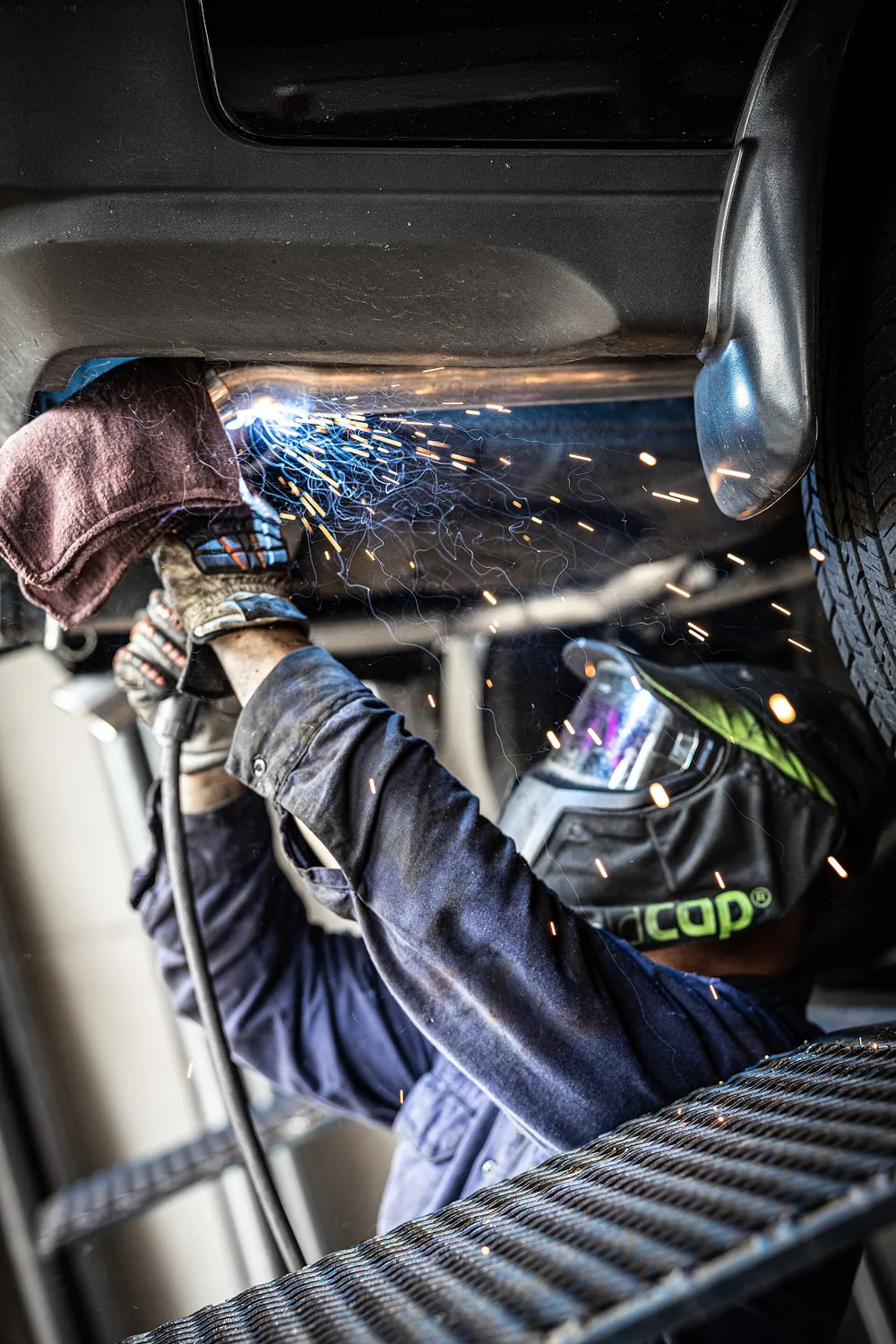 Wikimedia Commons・Gas Metal Arc Welding (Mig).jpg・CC BY-SA 4.0